
Health Indicators
One of the most important things you can do as a horse owner is learn what's normal for your horse. Having a baseline makes it easier to spot problems early - before they become emergencies.
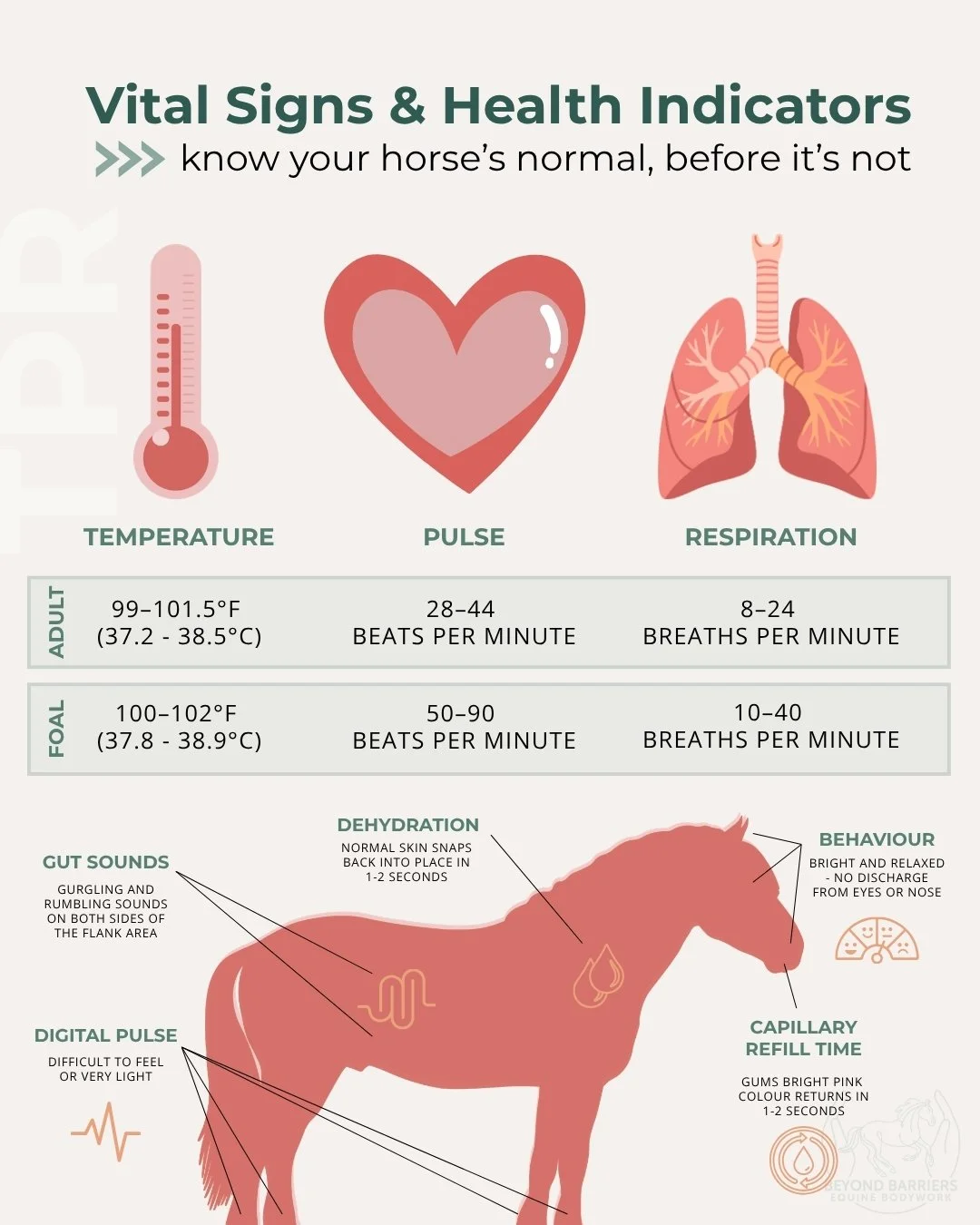
Vital Signs & Health Indicators
Temperature, Pulse & Respiration(TPR)
Temperature
Normal: 37.2°C – 38.5°C
Anything above 39°C may indicate fever or infection.
Heart Rate (Pulse)
Normal: 28–44 beats per minute
Higher rates can signal pain, stress, or illness.
Respiration Rate
Normal: 8–24 breaths per minute
Watch for rapid or labored breathing.
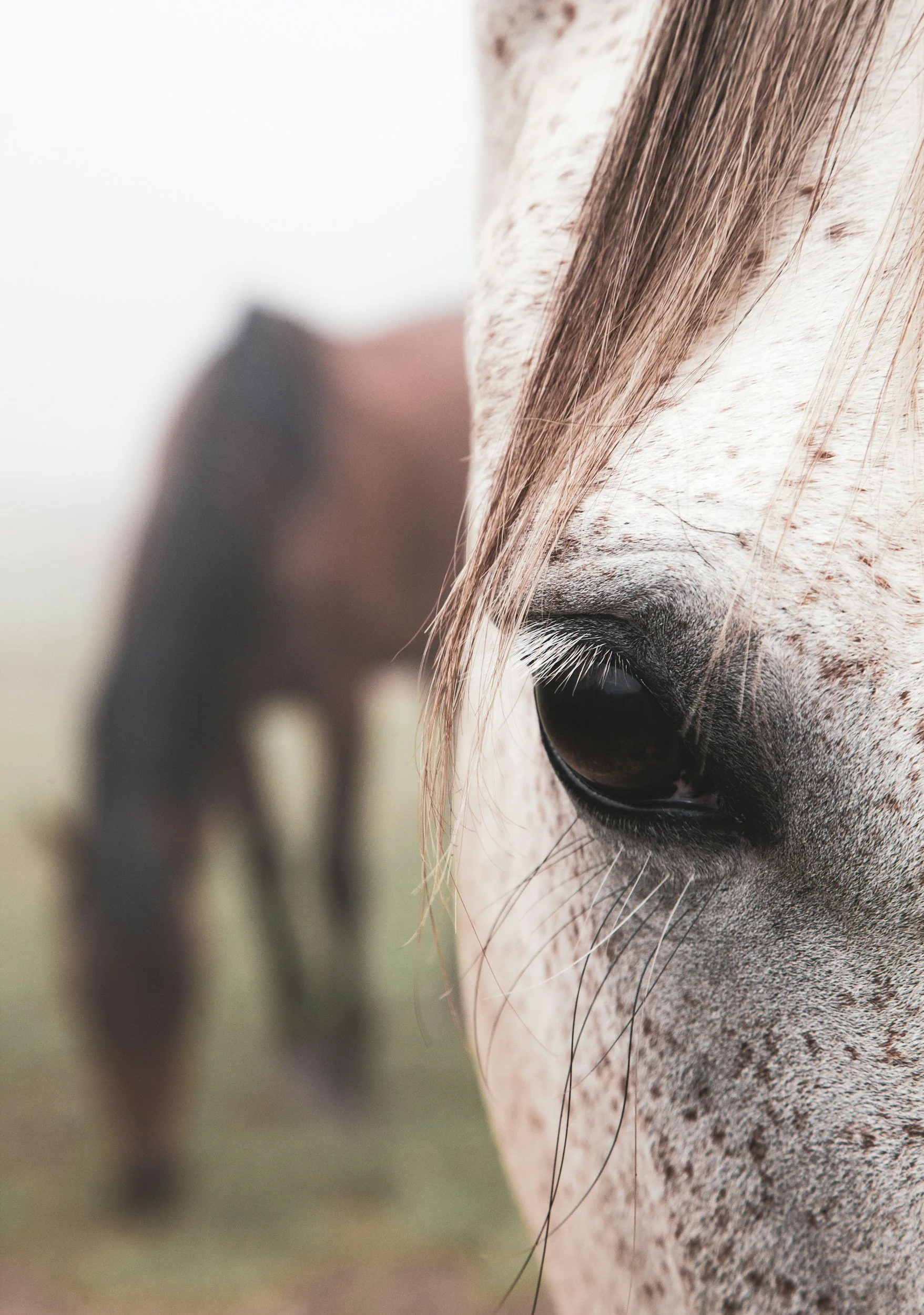
Triangle Shape Indicates Worried Eye
Health Indicators
Gum Color & Capillary Refill Time (CRT)
Healthy gums = moist and pink
Press the gum: color should return within 1–2 seconds.
Gut Sounds
Listen on both sides of the abdomen—should hear regular gurgling.
Reduced or absent sounds can be a warning sign of colic.
Digital Pulse
Pulse felt in the palmar digital arteries of the fetlock. A very strong digital pulse at rest could indicated abscesses or laminitis.
Hydration Check
Pinch the skin on the shoulder or neck—if it doesn’t snap back quickly, your horse may be dehydrated.
General Behavior
Know your horse’s normal attitude, appetite, and energy level. Subtle changes often signal the first signs of trouble.
These are general guidelines of a healthy horse at rest. Normal vitals vary as horses age.
Record your horse’s normal vitals when they’re healthy. Keep it handy in your barn and trailer!
A good time to do it would be a couple days before your annual health checks so you can discuss any abnormalities with your veterinarian during their visit.
In an emergency, take your horses vitals before calling the vet - if possible. This will give allow them to give you guidance over the phone to keep your horse more comfortable until they arrive.
These numbers represent the average healthy horse at rest. If you do a search on reputable databases, these numbers vary slightly, which is why it's important to do your own research and get to know what's normal for YOUR horse as an individual.